Friday Flash Fiction: After the fire

Friday Fictioneers is on Facebook hosted by Rochelle Wisoff-Fields. You can read other stories or better join in and write your own at https://rochellewisoff.com/. A complete story in 100 words in response to a photo prompt.  I’ve been too busy these last few weeks to read or write but I’ve enjoyed today’s challenge and am looking forward to reading some other stories. My natural story length for this seems to be settling at 120 or so words so editing is becoming a wee bit easier, I think.


photo prompt by J Hardy Carroll

After the fire

It was the water she remembered: acute shining fountains; reflections everywhere.

They could watch from their window. Safe, the chief said, behind the yellow ribbon. A crowd gathered on the street below. This was entertainment, nothing terrible, and besides, said the chief, nobody lived on the premises.

But as the show went on, the crowd were paled by the ash, their faces streaked with irritant tears. They coughed and went away.

The morning after, the ribbon was still up and the hydrants exposed. Street quiet and no one but cleaners and menders and doorway sleepers wandering invisible, dazed or dead.


Friday Fictioneers: Roots

Friday Fictioneers is on Facebook hosted by Rochelle Wisoff-Fields. You can read other stories or join in and write your own at https://rochellewisoff.com/. A complete story in 100 words in response to a photo prompt.

tree picture

photo prompt by Sandra Crook

She wakes thirsty, the glass by her bed is empty.

The tree is a legend, stories attach to its branches: it was a hanging tree and before that its bark made the barren bloom. Its homely scar has offered temporary sanctuary.

History in the garden – it brings in the punters. Its fame has spread as its roots.

Like her, the tree is thirsty, sucking the front wall loose and toothy. Now it has reached the house: her ground floors burst, tiles cracked. She tripped with a tray of glasses yesterday, watched the liquid dry, into the floor.

My Speeding Heart

Friday Fictioneers is on Facebook hosted by Rochelle Wisoff-Fields. You can read other stories or join in and write your own at https://rochellewisoff.com/. A complete story in 100 words in response to a photo prompt.

photo prompt by Douglas McllRoy


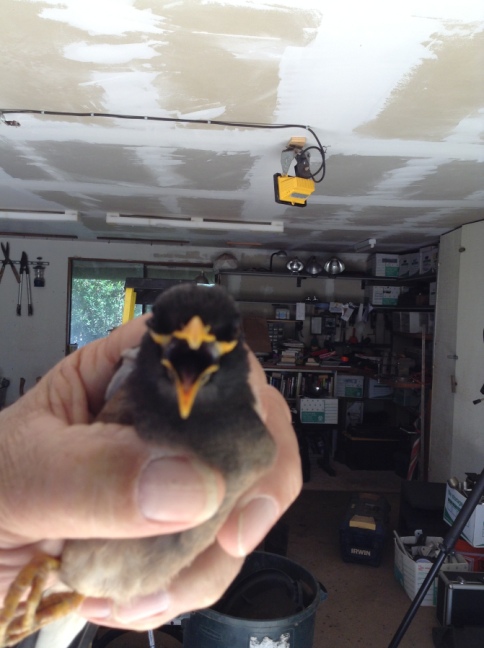
Your nails are nothing like my claws. Your heart is steady.

This is the one place you let me fly: window-lit, tree-less. Full of the tools you humans grow: pliers and torches and the ancestors of the new sound machine that sits in honour on the sideboard.

You think I am getting tamer. (‘so calm, so still’).

I am not.

You dream of flying, humans do.

I dream you leave the window open. Your fingers steal the beat of my speeding heart but it doesn’t belong in your chest. You must go rushing after it, crashing on the floor.


London Review of Books Blog On Grenfell Tower: Nothing But Feeling

Nothing But Feeling « LRB blog

19 June 2017

There was a moment in her interview with Emily Maitlis on Newsnight on Friday when Theresa May mentioned a woman who had escaped the Grenfell Tower fire in just a T-shirt and knickers. The woman stays with you. Very briefly, something broke through the repetitions and evasions of the official discourse being deployed by the government, Kensington and Chelsea council, and ‘interested’ corporate parties who insist that regulations were complied with and profess to welcome any investigation.

Downing Street had clearly decided that May’s performances on Thursday hadn’t worked. It was feeling that the prime minister was sent out to communicate the following day; her repeated use of the words ‘horrific’, ‘terrible’ and ‘horrendous’ was the obvious index of this. And her repeated reference to the £5 million emergency fund, with its connotations of practical immediacy, was intended to make up for the lofty distance suggested by the public inquiry she had announced the day before. By Saturday morning, direct speech had been abandoned altogether, with Damian Green, the first secretary of state, insisting that ‘she’s distraught by what happened as we all are.’

It’s easy to charge May with a lack of empathy, a personal psychological failing. But her evolving language after the Grenfell fire is part of a bigger official discourse, which is itself in crisis. It is an axiom of popular knowledge that politicians never answer the question that’s put to them; a cliché that most political representatives don’t listen. Conversely, political parties never seem to tire of telling their constituencies what they are thinking or what they ‘really’ meant when they voted for Brexit or Ukip or Labour or the Lib Dems. And when they don’t respond predictably or conveniently, when they respond with anger or contempt, or propose an alternative version of events or proposal for what should be done, it is conventional for politicians to represent this not as conflict or divergence but as a communication failure: we just didn’t get our message over clearly enough.

The work and pensions secretary, David Gauke, gave an interview to Channel 4 News on Friday evening. As he tried to step deftly between ‘regulations’ and ‘guidance’ while saying nothing that would implicate him or his government in anything at all, it was almost inevitable that Gauke would slip. The speed at which he self-corrected ‘simplify the regulations’ to ‘simplify the guidance’ was remarkable. There was a startling lack of concrete nouns in Gauke’s language, and had it not been for the interviewer, Cathy Newman, you would hardly have known what events Gauke was talking about. He used the word ‘fire’ only twice in the six-minute interview, and despite Newman’s repeatedly asking whether the residents of Britain’s 4000 tower blocks could feel safe, Gaufe avoided using the words ‘safe’ or ‘safety’. He wasn’t speaking to the moment but to a probable future; his words had been chosen to withstand the scrutinies of inquest, investigation and enquiry. He said nothing that attributed responsibility to anyone or anything. The Downing Street statement that support for victims in the immediate aftermath of the fire ‘was not good enough’ is comparable:

The response of the emergency services, NHS and the community has been heroic. But, frankly, the support on the ground for families who needed help or basic information in the initial hours after this appalling disaster was not good enough.

This crucially obscures the question of where the support might have – should have – come from.

Gaufe’s replies were part of a catch-all disaster script, stuck together with boilerplate phrases: ‘we must get to the bottom of … we must understand … we mustn’t jump to conclusions.’ The ‘we’ of government is a problem in this crisis, raising a raft of questions about responsibility. May, Gauke et al. can adopt a ‘we’ quite comfortably if it is the ‘we’ that makes money available or instructs other agencies (fire services, local councils etc.) to make checks, follow guidelines and, by inference, bear responsibility for the fire and what follows. This ‘we’ also does vaguer stuff such as offer condolences, ‘get to the bottom of’ things and ‘try to fully understand’ them. But it quickly finds itself in tricky territory. ‘We’ mustn’t rush to conclusions or pre-empt investigations, and it can soon look as if ‘we’ isn’t doing much at all except standing on the sidelines and exhorting.

Responsibility is a double bind. The government, Kensington and Chelsea council, and the companies they outsource to, must appear to be agents who are in control and capable of dealing with what May called ‘an absolutely horrendous tragedy’. But they also want to deflect from themselves any responsibility for causing it, with the effect that they sound distant, defensive, repetitive and on occasion paralysed. Discursively they cannot win, which is one reason the fetish for feeling is so critical.

In May’s Newsnight interview, the fire was a ‘tragedy’, an ‘event’, an ‘incident’, at one point, agonisingly, a ‘circumstance’, nouns nearly always preceded by such epithets as ‘horrendous’, ‘terrible’, ‘terrifying’, which were themselves sometimes preceded by ‘absolutely’. Painful as this discourse is, it is uncomplicatedly intransitive: it promises nothing but feeling, and sidesteps hard questions about responsibility and agency. So if there is psychological failing, there is also, more importantly, political strategy. Virtues and their opposites have historically specific forms and perhaps it isn’t surprising that empathy and understanding, the demonstration of feeling for others, have assumed such significance in such a fundamentally unequal society.
Welcome

IMG-2136

I am a writer and a teacher, a reader and a viewer.

My first novel Miss Boston and Miss Hargreaves, published by Penguin in 2017 and based on the life of my grandmother, is set in agricultural England in the 1940s and 1950s. It was shortlisted for the Walter Scott Prize for historical fiction in 2018 and I was lucky enough to be chosen as a Writer in Residence at Gladstone’s Library in Wales. My short story Wires, set in Milan in 1926, was longlisted for the Royal Society of Literature’s W. S. Pritchett Prize in 2019. I am currently finishing a second novel, set in Northern Italy in the 1920s and 1930s.

Before writing fiction, I worked as an academic at Middlesex University, teaching and writing about 19th century, colonial and post-colonial literatures and histories of publishing and reading.

I have contributed reviews and articles to a wide range of magazines and journals including Sight and Sound, Radical Philosophy, English Literary History, New Left Review and the London Review of Books blog.

On this site, you can read more about Miss Boston and Miss Hargreaves: reviews, interviews and pieces about the writing and the research process. I also post short fiction and non-fiction pieces, as well as criticism about books, TV and film.

Sunday

Friday Fictioneers is on Facebook hosted by Rochelle Wisoff-Fields. You can read other stories or join to write your own at https://rochellewisoff.com/. A complete story in 100 words in response to a photo prompt.

photo prompt: Ted Strutz

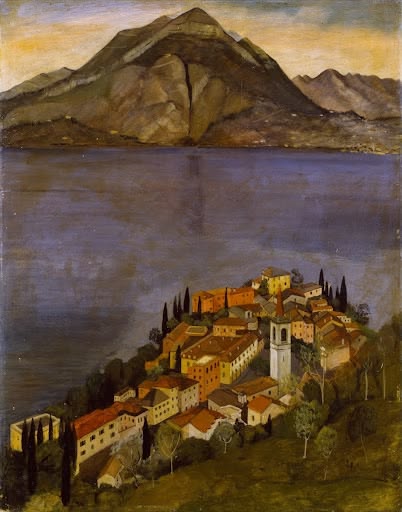
They had been planning this Sunday on the lake. She had words for the sky, for the water: cerulean, pellucid. No exaggeration.

The town was a jewel pressed onto the lake’s edge; there was a restaurant under vines.

The boat didn’t stop. Dumped them on the opposite side in another town. Change of timetable.

The boat that could take them back was three hours away, the bus wasn’t running.

They ate sandwiches on the harbour wall, trying to laugh it off.

On the boat, she looked back at where they’d been:  houses the colours of pink sugar almonds and saffron.

The Warehouse


Friday Fictioneers is on Facebook hosted by Rochelle Wisoff-Fields. You can read other stories or join to write your own at https://rochellewisoff.com/. A complete story in 100 words in response to a photo prompt. My second attempt…

friday fictioneers 2photo prompt by J Hardy Carroll

The warehouse

She skips past the old warehouse, all boarded up now. It is a tale of terrific failure – that’s what her dad said and she can see: nothing happens here. He was only repeating well-oiled rumour. Limp metal, a jamb in slow-motion fall. She passes every day, feels the shadow of the blackened chimney, the creep of rot. The days pass and she skips more slowly, sees more slowly: sees the stripes of rust and the makeshift armour of corrugation, notices how the glass has survived everything, how it shines.

A first attempt at flash fiction

I’ve just joined Friday Fictioneers on Facebook hosted by Rochelle Wisoff-Fields. You  can read other stories or join to write your own at https://rochellewisoff.com/. This was my first attempt at Flash Fiction.  A complete story in 100 words in response to a photo prompt. Here it is.

Photo prompt © Sarah Potter

He sat on the bench, feet off the floor and underneath him. There was one other person: a girl. She walked down the platform towards him. Before he looked down, he thought how pretty. She had big, duck feet and battered white shoes; coming closer, she smelt of fresh things. The rails started to ring and she stopped in front of him. Doors opened and slammed and then she was gone with the train. Quiet. Except: her battered shoes, posed, inches from the platform’s edge like a dark joke and his bare feet filthy. He went to get them, smiling.

 1939 A woman disappears into a war

Miss Boston and Miss Hargreaves is the story of two working-class women who come from different worlds: Rene Hargreaves, a restless, young woman from Manchester in flight from her marriage and Elsie Boston, a sole smallholder in Berkshire, thought of by the locals as irredeemably strange or ‘unked’. Rene comes to work at Elsie’s beloved farm, Starlight, in 1941 and the novel follows their relationship as Elsie loses the farm and the two women begin a journey together through England as itinerant farm workers. Rene and Elsie are resolutely unfashionable; a bohemian, queer world flickers at the edges of their lives, but is not for them it seems. WE WILL GO FORWARD TOGETHER say the wartime propaganda posters and Rene and Elsie do: the war obscuring some of their strangeness. But as peace settles and conventions are reasserted Rene and Elsie become more visible and start to look a little queer. Just as they seem set to secure a new life in Cornwall, a stranger from Rene’s past comes to stay and their whole way of life is threatened. Have a look at some reviews here.


Click here to buy the book

paperback edition published in February 2018
hardback and kindle edition available now

The Guardian: Other Lives – a piece I wrote about my father

 Originally published, 3 April 2013

Naeem Malik obituary

Naeem Malik as a student in the 1950s in London, whose cosmopolitanism he loved
 Naeem Malik as a student in the 1950s in London, whose cosmopolitanism he loved

The working life of my father, Naeem Malik, who has died aged 83, was characterised by restlessness. He worked as a tutor, a restaurant reviewer and as a broadcaster for the BBC’s Urdu language service, supplementing these jobs with import-export. He was asked to set up a margarine factory and a fish farm; there was also an ill-starred adventure with a rotating advertising sign.

He was born in Amritsar, north-west India. His father narrowly escaped the Jallianwala Bagh massacre in Amritsar ordered by General Reginald Dyer in 1919. Amritsar was just 15 miles from what became, unexpectedly and violently, the line of partition between India and Pakistan in 1947. Naeem took to the streets that year armed with a molotov cocktail, which exploded before he could throw it. At the railway station, on a stretcher, his red-stained arms nearly provoked a riot – although it was “only” the red of the antiseptic mercurochrome.


When he and my English mother, Marion, got engaged in the early 1960s, her family thought he might be an Indian prince – a rumour he never quite denied. Officially a republican, he loved the spectacle of monarchy. A committed anti-racist, he was convinced (wrongly) that he had never suffered racism. He loved England, but his England, like everyone’s, was selective. He had his flashes of national feeling: watching the FA Cup final, hating Mrs Thatcher.

He fell in love with London: Italian coffee and European cinema, exclusive department stores, a then-shabby South Bank, Hampstead Heath, the theatre, concerts and opera. He also developed an encyclopedic knowledge of the city’s bus routes and tube lines.

For his nephews and nieces going west – mainly to the US – he became a model of a different life, secular and cosmopolitan, and he will be remembered by all as a great cook. In his later years, illnesses put paid to his vigour, but he loved being Grandpa with his grandson, Luca. His failing eyesight made him miserable, but he got great pleasure from his talking books, finally reading Salman Rushdie’s Midnight’s Children and Shame, after years of procrastination.

He is survived by Marion, me and Luca.